
Recently, I was tasked with translating subtitles for a feminist film from French to Greek. This raised an intriguing question: can male translators accurately convey feminist messages in a film, given that they are not female or do not identify as such? Without a tight deadline, I decided to explore feminist and audiovisual translation (AVT) theory to determine if I could accomplish this task.
I consider myself a feminist, advocating for an equal society regardless of sex, gender, sexual orientation, skin color, ethnicity, or religion. However, I wondered if this was sufficient when translating subtitles for feminist audiovisual material. What additional skills should a professional acquire for such a task?
Despite my experience in translating subtitles for festivals like the International Thessaloniki Film Festival, the Thessaloniki Documentary Festival, and the Olympia International Film Festival for Children and Young People, this project was unlike any I had previously participated in. I was assigned to translate the main film for the Athens Porn Film Festival, organized by filmmaker and festival director Menelas Siafakas. Although porn festivals are considered controversial in Greece, they are held in major European cities such as Berlin, Brussels, and Vienna, aiming to deconstruct taboos about sex and disseminate feminist and queer liberation ideologies.
“Chaos” and Feminism: Translating the Narrative of Empowerment
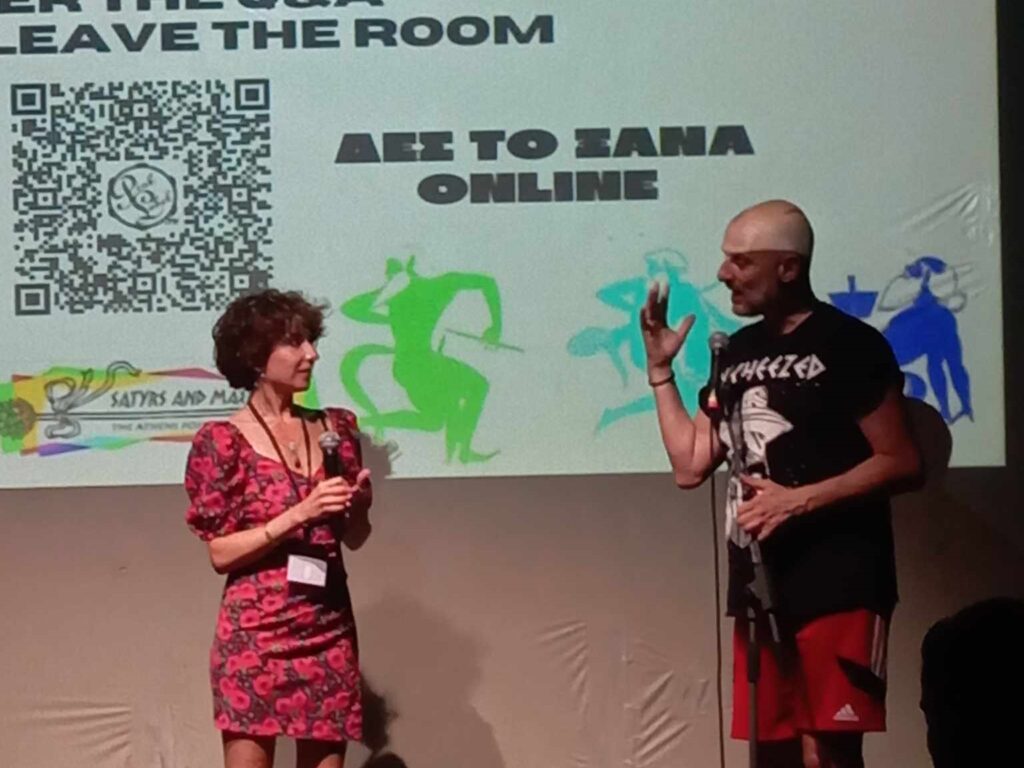
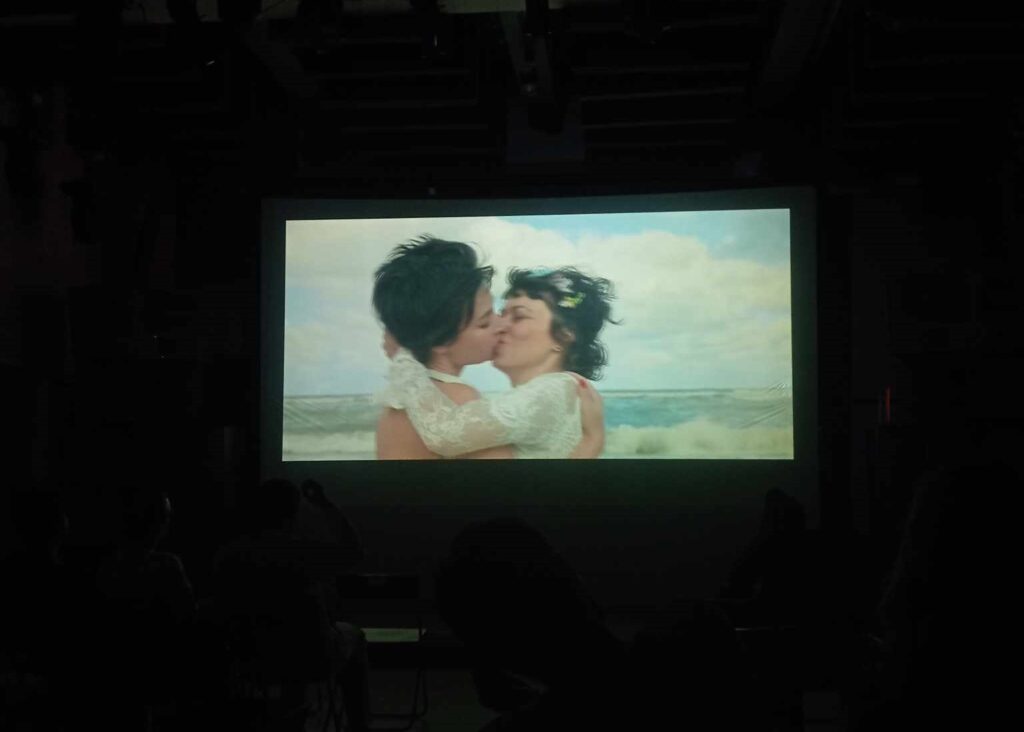
The film I translated was “Chaos” by French feminist director and writer Anoushka, whom I had the opportunity to meet after the screening. The story centers on a female sex worker who is verbally and psychologically abused by her male partner. She joins a trauma treatment center for women, meeting others who both men and women have mistreated. Through a fictional narrative, the author and director conveys her experiences with love, her feminist struggles, and her work as a female artist in a male-dominated industry.
Subtitling for film and television differs from other types of translation due to the need for accessibility, comprehension, and consideration of cultural and linguistic differences (Jingyi & He, 2023). The quality of subtitle translation can significantly impact the audience’s understanding and reception of the work. In recent years, AVT translation has aligned with the growing influence of feminism.
Male directors often shape female characters based on patriarchal perceptions, endowing them with stereotypical traits, such as tenderness, selflessness, and constant sex appeal (Jingyi & He, 2023). Although most of the characters starring in the selected films are women, femininity is depicted alongside masculinity and other important aspects of gender identity: social status, sexual orientation, and ethnicity (De Marco, 2016). This is the pattern followed by many male directors and/or writers: narrative cinema = prominent male gaze = objectification and subservience of the female character and/or body (De Marco, 2016).
However, “Chaos,” written and directed by a feminist woman, breaks these limitations by presenting a female protagonist who stands up for herself and defends her choices despite her partner’s disapproval. She finds strength and guidance from other women who have experienced similar abusive experiences, empowering her to overcome her situation. As a film representing the new era of women, “Chaos” deconstructs the concept of patriarchy. It eliminates stereotypical images of women in society and deeply explores women’s subjectivity, drawing attention to feminism.
Feminist Translation Strategies in Audiovisual Media
Feminism challenges male hegemony and advocates for women’s independence, addressing issues that require attention and focus, much like translation issues that have long been overlooked (Jingyi & He, 2023). Translators can employ feminist strategies when working with feminist films, emphasizing the significance of translation and highlighting the translator’s subjectivity. Feminist translation is regarded as an action-based theory to achieve political visibility, providing feminist translators with a potential way to reach their goals (Sun, 2021). They aim to challenge patriarchal prejudices in language and to open up a new angle for women’s/feminist discourse (von Flotow 1997, as cited in Sun, 2021).
For such a diverse spectrum of elements, the translator relies not just on a theoretical framework drawn from Translation Studies, but on a wider one that crosses multiple disciplines: Audiovisual Translation (AVT) is prone to interconnect due to its hybrid nature, particularly with Film Studies and Linguistics (De Marco, 2016).
Feminist translation does not aim to reconstruct a female-dominant context but to provide a new way of translating gender issues (Sun, 2021). Guided by the Skopos theory, feminist translators use novel strategies to translate the source text to highlight gender and feminist aspects (Sun, 2021). Translators can add elements they consider necessary to their translation to achieve equivalent source-target language pairs.
There are two interesting approaches: women-identified and women-interrogated approaches (Sun, 2021). These techniques positively respond to the translator-centered approach, focusing on women, especially in the women-identified approach where “translators identify themselves as women” (Maier, 1998: 100, as cited in Sun, 2021). Feminist awareness allows for the use of subjective consciousness to emphasize “female consciousness” in the translation, highlighting the prominence of female consciousness and feminist ideology within the characters (Jingyi & He, 2023). Reference is also made to campaigns in favor of implementing inclusive practices through institutional guides for the use of non-sexist language.
Another strategy that can be employed is feminist characterization, where the translator modifies the tone and personality of the characters’ dialogue based on their characteristics in the work (Jingyi & He, 2023). This adjustment underscores their pursuit of gender equality and female dignity.
After applying feminist strategies and stepping into the shoes of the female protagonists, I aimed to give voice to their struggles and convey their powerful messages. I also used gender-inclusive language, such as female nouns, adjectives, and professions (e.g., the feminist term “σεξεργάτρια” for “travailleuse du sexe” which means female sex worker). I also stuck to the strong messages and ideas the director and writer sought to put across. In this particular case, I had the freedom to do so. However, to what extent are distributors, networks, and other business interests involved in recognizing or even caring about gender issues in translation? However, this is a different topic I could bring up in another article.
Conclusions
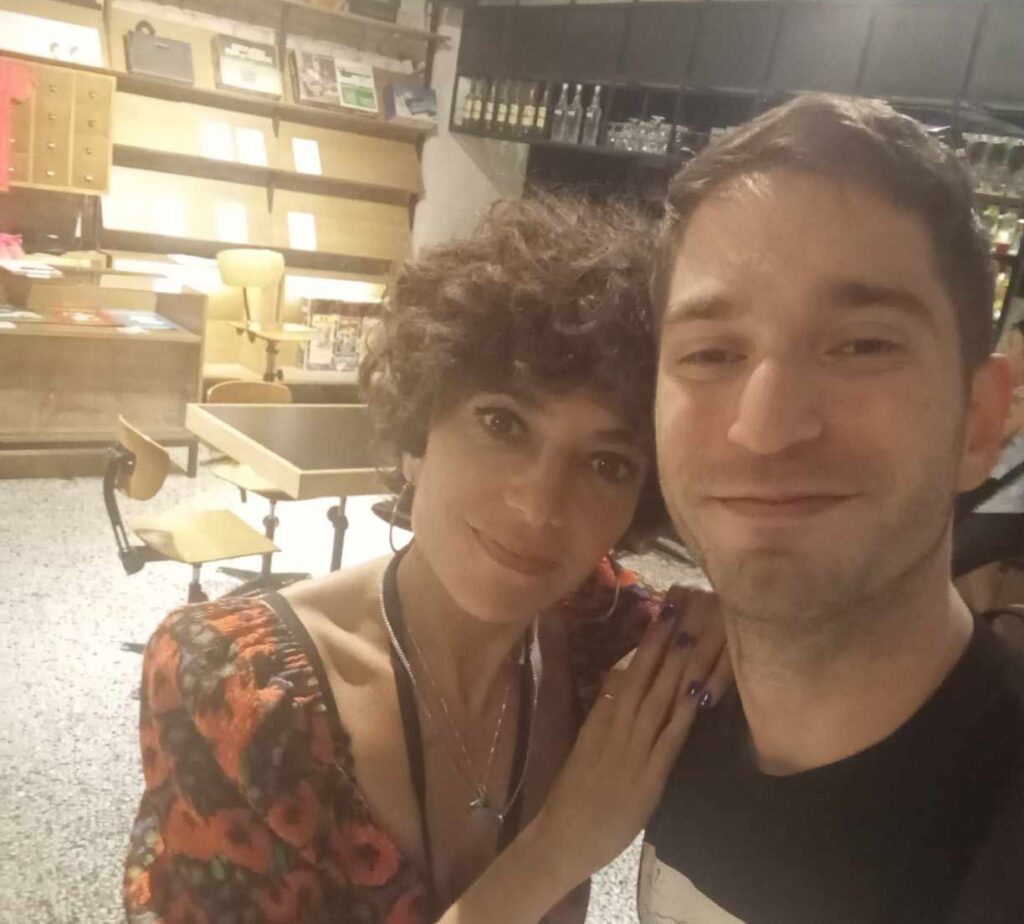
Following the screening of the film, which received a standing ovation from the audience, I felt that my goal was achieved. The message of the film had been conveyed to the Greek audience through the subtitles I translated in the best possible way. The feedback I received from some audience members was positive; they told me it was evident that the film was translated through a feminist lens. After discussing with the director during the Q&A part of the festival, it seemed that I had managed to grasp the meaning and objectives she wanted to convey as a feminist artist. However, I still believe there is room for improvement, and I have much more to learn about feminist translation, both for AVT and my profession, in general.
To conclude, I believe any translator can effectively translate feminist audiovisual material regardless of their sex and gender. The key is to engage deeply with feminist theory and Gender Studies, both generally and within their profession. It’s crucial to stay updated on evolving language, use gender-fair terms, highlight the voices of women, LGBTQI+ community members, and other marginalized groups, and give prominence to their social status. Additionally, translators should seek insights from colleagues, participate in feminist associations, conferences and events, engage in gender-related studies or workshops, and, most importantly, embrace a lifestyle that advocates for equality in all aspects of life.
References:
De Marco, Marcella. ‘The ‘Engendering’ Approach in Audiovisual Translation’, Target 28(6): 314–325. (2016). Available at https://repository.londonmet.ac.uk/4930/1/De%20Marco%202016_Target.pdf
von Flotow, Luise & Josephy-Hernández, Daniel. Gender in Audiovisual Translation Studies: Advocating for Gender Awareness. (April 2018). Available at https://www.researchgate.net/publication/324685226_2018_Gender_in_Audiovisual_Translation_Studies_Advocating_for_Gender_Awareness
Sun, Ruoxuan. Feminist Translation: Translator’s Subjectivity, Strategies and Influences. Journal of Higher Education Research. (November 2021). Available at https://www.researchgate.net/publication/355962117_Feminist_Translation_Translator’s_Subjectivity_Strategies_and_Influences
Jingyi, Zhang & He, Yutong. A Feminist Translation Approach to Subtitle Translation Strategies of Myth of Love. Proceedings of the International Conference on Global Politics and Socio-Humanities. (2023). DOI: 10.54254/2753-7064/14/20230460. Available at: https://www.researchgate.net/publication/375767565_A_Feminist_Translation_Approach_to_Subtitle_Translation_Strategies_of_Myth_of_Love